Holiday Sweater Christmas Dogs: A Designer’s Review
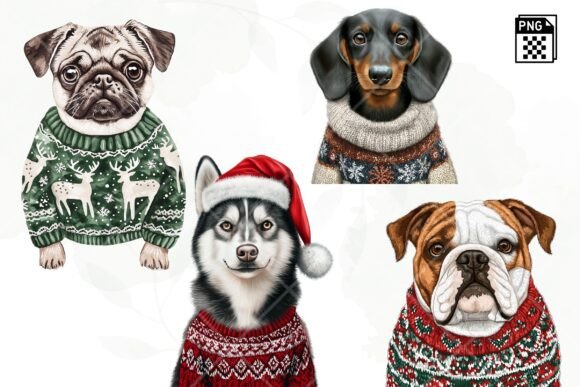
As an embroidery designer who has spent countless hours digitizing and stitching thousands of designs, I approach every new machine embroidery design with a mix of curiosity and skepticism. We have all been there: you see a cute graphic online, download the embroidery file, and hope it translates well to fabric. Today, I am taking a close look at Holiday Sweater Christmas Dogs. This piece falls under the category of Illustrations, which immediately sets certain expectations regarding detail, color usage, and stitch complexity.
My goal here is not just to tell you it is cute—because it is—but to evaluate how it performs in real-world applications. Whether you are an Etsy seller looking for your next bestseller, a hobbyist making gifts, or a professional running a craft business, understanding the technical behavior of this design is crucial before you commit to stitching it on expensive garments.
First Impressions and Visual Personality
The first thing that strikes me about Holiday Sweater Christmas Dogs is its warmth. It captures that specific cozy nostalgia associated with holiday sweaters, but with the added charm of canine companions. The layout feels balanced, avoiding the clutter that often plagues seasonal designs. For an embroidery project to succeed, the visual personality must be clear from a distance. This design achieves that. The shapes are distinct, and the theme is instantly recognizable without needing explanatory text.
From a digitizing perspective, illustrations like this require careful handling of transitions between colors. If the original artwork relies heavily on gradients, the digitizer must convert those into manageable stitch patterns. In reviewing this design, I look for clean lines and logical stitch directions. A messy fill can make a dog’s fur look muddy rather than textured. Fortunately, the structure here suggests a thoughtful approach to fill stitch placement, ensuring that the character of the dogs remains intact even when scaled down.
Real-World Application: The Sweatshirt Test
To truly test a design, you have to imagine it on a product. I recently considered using Holiday Sweater Christmas Dogs for a custom order of matching family sweatshirts. This is a common request in November and December. The challenge with sweatshirt embroidery is the fabric texture. Fleece and heavy cotton blends can swallow small details if the stitch density is too low or if the stabilizer is insufficient.
For this specific application, I would recommend using a cut-away stabilizer to support the weight of the stitches. The design’s medium-to-large scale works well here. On a chest pocket area or centered on the front, the dogs stand out clearly against the fuzzy background. The thread colors chosen for the sweaters within the design need to contrast well with the garment color. If you are stitching on a navy sweatshirt, ensure the reds and greens in the design are vibrant enough to pop. This is where testing on scrap fabric becomes non-negotiable. You need to see how the satins stitch edges hold up against the pile of the fleece.
Versatility Across Product Lines
Beyond sweatshirts, where else does this design shine? I see strong potential for tote bag design applications. A canvas tote with this festive motif makes for an excellent reusable gift bag or a standalone handmade product. Canvas is stable and easy to hoop, allowing the intricate details of the illustration to render sharply. Similarly, this could work beautifully as an embroidered patch. If you digitize or purchase a version optimized for patches, you can use dense satin borders to encase the design, making it durable and easy to iron or sew onto jackets and hats.
For baby embroidery, caution is advised. While the subject matter is adorable, you must check the size. If the design is too large, it will stiffen the front of a onesie. If it is too small, the tiny details of the sweater patterns might become lost or cause puckering on thin knit fabrics. Always verify the recommended hoop size and scale the design appropriately for smaller garments. Using a soft, tear-away stabilizer is essential here to maintain comfort against sensitive skin.
Technical Considerations and Pitfalls
No design is perfect for every scenario. There are specific situations where you should use Holiday Sweater Christmas Dogs carefully. First, consider curved surfaces like caps. Embroidering on a cap requires a design that is not too wide, or it will wrap around the curve and distort. Check the width dimensions of the file. If it exceeds six inches, it may not sit flat on a standard baseball cap without significant distortion.
Second, be mindful of dark fabrics. If the design includes light-colored threads for highlights on the dogs or the sweaters, these can get lost on black or dark navy materials unless you use an underlay stitch effectively. Some digitizers include a white underlay to boost brightness; check if your digital embroidery file includes this. If not, you may need to manually adjust your machine settings or choose a different garment color.
Third, watch out for dense stitch areas. Holiday designs often pack a lot of detail into a small space. High stitch density can lead to perforation of the fabric, especially if you are using lightweight materials like tea towels or thin cotton shirts. If you notice the fabric pulling or puckering during a test run, reduce the density in your software if possible, or switch to a heavier fabric like denim or canvas.
Enhancing Brand Value and Customer Trust
For small shop product creators, the quality of your embroidery directly impacts your brand reputation. A clean, well-stitched Holiday Sweater Christmas Dogs design signals professionalism. It shows that you care about the finished product. Customers are more likely to trust a seller whose items look crisp and durable. This design, with its appealing aesthetic, can help increase buyer engagement on platforms like Etsy. It is shareable, festive, and emotionally resonant.
When creating printable mockup images for your online store, ensure the lighting highlights the texture of the stitches. Show close-ups of the dogs’ faces and the sweater patterns. This transparency builds confidence. Buyers want to know that the personalized gift they are ordering will look as good in person as it does on the screen. Using high-quality design assets like this one gives you a head start in creating that premium perception.
Practical Notes for the Embroiderer
Before you launch into production, here is my checklist for working with this design:
- Test on Scrap Fabric: Always stitch a sample on the same type of fabric you intend to use for the final product. This reveals issues with tension, density, and color contrast.
- Check Thread Contrast: Ensure your thread colors match the intended mood. Vibrant holidays colors work best, but muted tones can create a vintage look if that fits your brand.
- Review Stitch Density: If the design feels too stiff after stitching, consider reducing the density or using a lighter weight thread.
- Confirm Hoop Size: Make sure your machine’s hoop can accommodate the design dimensions without re-hooping, which can cause alignment issues.
- Inspect Small Details: Zoom in on the digital preview. Are there any tiny isolated stitches that might snag? Trim jump threads carefully after stitching.
- Licensing Verification: If you plan to sell items made with this design, confirm the license terms. Most commercial embroidery designs allow for physical sales but prohibit sharing the digital file itself.
In conclusion, Holiday Sweater Christmas Dogs is a strong contender for your holiday lineup. It balances charm with technical feasibility, provided you respect the material constraints and prepare properly. Whether you are creating custom apparel, home decor, or unique gifts, this design offers the versatility and visual appeal needed to stand out in a crowded market. Treat it with the care it deserves, and it will reward you with beautiful, professional results.